Note: Since we published this post we’ve been in touch with Home Depot and they’ve provided some additional information. The original post is here and you can see additional notes at the end.
So here’s a funny story. I was recently visiting the team at a home and garden show in Richmond VA. We had some information to show prospective customers regarding typical pricing for replacement windows. We try to be as transparent as we can regarding all of the costs associated with a project like this and we find customers tend to appreciate it.
One of our examples showed a real quote that one of our customers received from Home Depot At Home Services along with the quote he received from us. We use this to illustrate the idea that we can typically offer better pricing for similar products that a big box store. The example shows our pricing was over $2,000 better for a typical project than the pricing offered by Home Depot window installations team.
While we were there, someone with some affiliation to Home Depot window installations came up to one of our managers and told him that our information was incorrect. We asked him what was incorrect and he stated that Home Depot At Home Services offers a lifetime warranty on their labor. We’ve never heard this before and we’re pretty in tune with the window business so we asked him for a copy of the warranty. At first he said it was proprietary and when we asked why their warranty would be a secret he said we could find it online.
Our goal is always to be accurate so we checked online and found that the Home Depot At Home Services website clearly states that they offer a 1 year labor warranty. This isn’t the end of the world, but it is a pretty short warranty. It would be a real shame to pay thousands more for a project and then have to pay again a year later to fix something.
Our manager tried to show the friendly gentleman from Home Depot that their own website was pretty clear, but he didn’t seem interested. He told us he was a district manager in charge of 90+ stores. You’d think he’d have his facts straight 😉
Anyway, we got a kick out of it. Here’s a screen shot of their site and a link as well.
Here’s a screen shot straight from the Home Depot website. Seems pretty clear to us.
Update: Since we wrote this post we’ve been in touch with Home Depot and they’ve provided some clarity on their warranty for installed replacement windows. Home Depot offers 2 main lines of replacement windows through their installation program. They are American Craftsman (made by Andersen) and Vantage Point (made by Simonton).
The American Craftsman windows from Andersen come with the 1-yera labor warranty that we mention above. This is pretty weak, but folks buying these windows likely aren’t focusing on getting top quality.
The Vantage Point windows from Simonton do come with a lifetime labor warranty. They call it a craftsmanship warranty which the salesperson in me really likes. Craftsmanship sounds nice and warm. They did provide us with a written warranty this time which we certainly appreciated. The labor warranty comes from Home Depot and not from Simonton, and that’s the way all labor warranties work.
There are some limitations which mean it’s not the greatest warranty we’ve ever seen, but it is better than the 1-year warranty that comes with the cheaper products. We’ll likely write up a full post on window warranties from big box stores in the future.
Thanks to the folks at Home Depot for providing additional info about their services.
If anyone reading this has any specific questions on the warranty or the limitations post a comment and ask!
If you’re looking for a window company right now, the best advice we have is to check out our list of the best window companies all over the country. You can find it right here.
The Simonton Reflections 5500 is at the higher end of the Simonton replacement windows. This model is distributed nationwide with several variations offered under various brand names including Prism or Prism Platinum.
Overall, as we’ve said before, Simonton makes a fine product, but this model is getting a little long in the tooth. It utilizes some older design elements and offers less than outstanding performance numbers.
What are the drawbacks of Simonton 5500 windows?
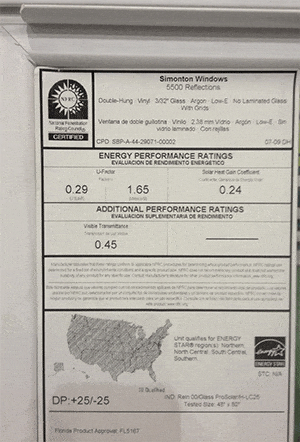
The biggest drawback for me is the thickness of the vinyl. You certainly get less glass area with the Simonton Reflections 5500 than you would with some competing products. For example, in the NFRC sticker below you can see the window with a U-Factor of 0.29 a SHGC of 0.24 and a rather low visible transmittance rating of 0.45.
Simonton Reflections 5500 window ratings
This window would block out too much light for my taste. There are other models that can achieve very similar ratings with a thinner vinyl frame resulting in more visible light and a higher VT rating.
As with most windows there are several glass options that can certainly affect the numbers, but the thick frame is here to stay.
What about the window hardware?
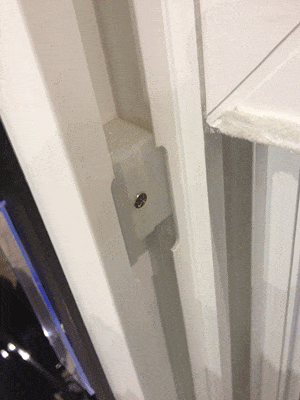
The Simonton Reflections 5500 also uses the inexpensive constant force balance mechanism which have several drawbacks. They also charge extra for features that many companies offer standard such as double strength glass, balance covers and heavy duty screens.
Here you can see a Simonton Reflections 5500 window with the constant force balance and no balance cover.
See this Simonton Reflections 5500 window with inexpensive constant force balance and no balance covers.
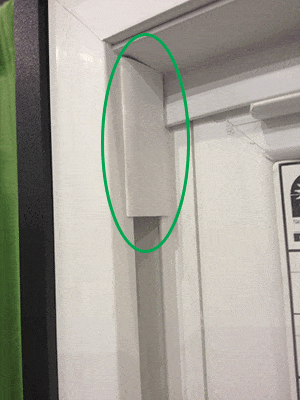
The last picture I’ll show you for now is of the sash stops this model utilizes. This block at the top of the frame prevents the sash from opening all the way. It’s not a very big deal on a large window and Simonton does a good job of making it as small as they can. On smaller windows you won’t be able to open the window as far as you’d expect. Why do they put it there? They have to because of the cheap constant force balance mechanism used in the jambs.
See the sash stop that prevents the bottom sash from sliding all the way to the top.
You might ask yourself if this balance mechanism or the lack of a balance cover or the sash stops are a huge deal and the answer is probably no. I mention them here to illustrate the idea that perhaps this product doesn’t represent a fantastic bang for your buck.
There are many old and outdated design elements in this product that just aren’t necessary anymore. The price of a Simonton Reflections 5500 window doesn’t typically reflect the fact that it’s a bit old fashioned.
Is this window offered under different brand names?
As you’re considering your options remember that manufacturers will often offer the same or VERY similar products under many brand names. They do this to help contractors selling the products avoid competing directly on price. If you get 2 quotes from 2 companies offering the exact same product then the price becomes a relatively important point of differentiation. However, if one of the companies can tell you all about why their product is “better” then perhaps the price will become less of a factor.
If you think this is a little strange, you’re right, but it happens in every industry from mattresses to bowling balls.
To sum up this Simonton Reflections 5500 window review I’d say overall it’s a fine product from a reputable manufacturer (despite my nitpicking), but you can usually do better for a lower price.
Keep looking.
If you’re looking for a window company right now, the best advice we have is to check out our list of the best window companies all over the country. You can find it right here.
Disclaimer: We recently started offering Alside windows (almost) nationwide for you to install yourself or with professional installation by the manufacturer. We do it all with no in-home salespeople. Details here.
For our Alside Ultramaxx window review we’ll compare the Ultramaxx to the other Alside window products. The Ultramaxx windows sit near the top of the Alside window line. Very similar products are sold under various brand names including Alside Sheffield and Comfort World 6000 series. When we say they sit near the top of the line that doesn’t necessarily mean it’s a better product than anything else, but it does tend to cost more than some other products out there.
When comparing and reviewing Alside windows, the Alside Mezzo window (which we reviewed recently) stacks up pretty well. The Ultramaxx doesn’t compare very well except in a few specific situations. For example, the Alside Ultramaxx window is available with triple pane glass while the Mezzo window was not available with this option when initially launched. The Mezzo model does now offer this option so there’s one less reason to pick the Alside Ultramaxx window.. Obviously this only matter to you if you’re interested in triple pane glass.
Another difference is in the weatherstripping that the Ultramaxx window comes with. This sounds good and the salesperson might tell a great story to go with it, but if you compare the air infiltration ratings you’ll see the Mezzo is typically better. This tells you the extra weather stripping on the Alside Ultramaxx isn’t doing you much good.
One important factor to consider is that the Alside Ultramaxx window uses a substantially thicker frame which reduces the glass area considerably. If you’re looking at samples in person take a look at the thickness of the frame, especially the sill at the bottom. Only you can decide if that’s what you want in your home, but it will reduce the visible glass area and reduce the visible transmittance rating.
Alside Ultramaxx vs Alside Sheffield
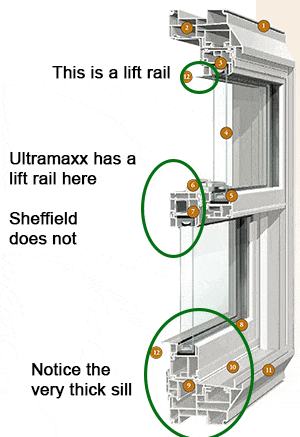
The Alside Ultramaxx and the Alside Sheffield share the same frame and ALMOST all of the same parts. There are only 2 two differences between these 2 products. One is the type of sill. The Ultramaxx uses a Pocket sill that allows water to run down through the frame and the Sheffield uses a sloped sill that lets water run down and out. There are advocates for both designs, but at the end of the day they’re pretty similar. Even the Sheffield here doesn’t use a true sloped sill, but perhaps that’s a discussion for another day.
The Alside Ultramaxx and Sheffield models are almost identical the differences are the design of the sill and the lift rail at the top of the bottom sash.
The second difference between the Ultramaxx vs the Sheffield is the lift rail on the top of the bottom sash. The Sheffield has a lift rail at the very top and at the very bottom of the window, but it does not have one in the middle. The Ultramaxx adds another in the middle of the window. Having trouble visualizing what I’m saying in this section? Don’t sweat it, these two windows are essentially the exact same product with different names.
Why do they make these small differences between the Ultramaxx and the Alside Sheffield?
Just so the folks selling them can tell you why one is better than the other. They’re really 99% the same window.
To sum up the Alside Ultramaxx review I’ll say if you’re getting triple pane glass it’s a perfectly fine option. If you’re not this window might not make sense and you’ll be better off saving some money with the Alside Mezzo.
Other posts about Alside windows and doors that you might find helpful:
If you’re looking for a window company right now, the best advice we have is to check out our list of the best window companies all over the country. You can find it right here.
Disclaimer: We recently started offering Alside windows (almost) nationwide for you to install yourself or with professional installation by the manufacturer. We do it all with no in-home salespeople. Details here.
Here we’ll be taking a look at the Alside Sheffield windows. The Sheffield windows used to sit near the top of the Alside window line. Very similar products are sold under various brand names including Alside Ultramaxx and Comfort World 6000 series. This doesn’t necessarily mean it’s a better window than the Alside Excalibur or the Alside Mezzo (their other common offerings), but it does mean it will likely cost more.
In comparison to the newest window in the Alside line, the Alside Mezzo window (which we reviewed recently), the Sheffield doesn’t compare very well except in a few specific situations. For example, the Alside Sheffield window is available with triple pane glass while the Mezzo window was not when initially launched. The Mezzo window now has this feature available so that leaves one less reason to buy the Sheffield model. Obviously this only matter to you if you’re a triple pane kind of person.
Another point of differentiation is the fact that the Sheffield window has a few extra pieces of weather stripping. This sounds good and the salesperson might tell a great story, but if you compare the air infiltration ratings you’ll see the Mezzo is typically better. This tells you the extra weather stripping on the Alside Sheffield isn’t doing you much good. It provides the salesperson a nice story to tell, but it doesn’t do much else.
The biggest drawback in my mind is that the Alside Sheffield window uses a much thicker frame which reduces the glass area considerably. If you’re looking at samples in person take a look at the thick frame, especially the sill, and decide if that’s what you want in your home.
Alside Sheffield vs Ultramaxx
The Alside Sheffield and the Alside Ultramaxx share the same frame and ALMOST all of the same parts. There are only 2 two differences between these 2 products. One is the type of sill. The Sheffield uses a sloped sill that allows water to run off and the Ultramaxx uses a pocket sill that drains water out through weep holes in the frame. There are advantages and disadvantages to both systems.
The Alside Sheffield and Ultramaxx models are almost exactly the same product.
The second difference between the Sheffield vs the Ultramaxx is the lift rail on the sash. The Sheffield has a lift rail at the very top and at the very bottom. The Ultramaxx adds another in the middle of the window. Having trouble visualizing what I’m saying in this section? Don’t sweat it, these two windows are essentially the exact same product with different names.
To sum up the Alside Sheffield review I’ll say if you’re getting triple pane glass it’s a fine option. If you’re not this window does’t really make sense and you’ll be better off saving a few bucks with the Alside Mezzo.
If you’re looking for a window company right now, the best advice we have is to check out our list of the best window companies all over the country. You can find it right here.
When deciding on triple pane vs double pane glass for your new windows there are several important factors to consider. There are differences in sound transmission, weight, efficiency and cost. Here we’ll take a look at all 5 factors to help you make the best decision for you and your home.
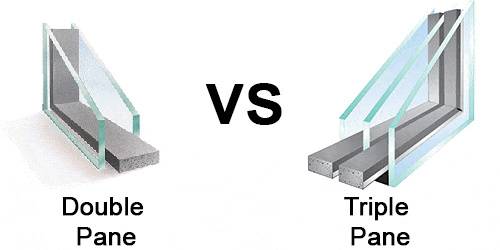
When comparing double pane vs triple pane windows there are many factors to consider.
How about noise through triple pane vs double pane windows?
It is VERY common for replacement window salespeople to tell folks that windows with triple pane glass will reduce noise in the home. In fact, switching from double pane to triple pane has a very small impact on sound. You’d be much better served by going with laminated glass. We go into more depth on this in our sound transmission post. The long and the short of it is if you’re buying triple pane windows to reduce noise you’re overspending.
Are triple pane windows heavy?
Well, yes they are heavier, but it shouldn’t matter to you. A high quality replacement windows will have a balance mechanism to counterbalance the weight of the sash. Regardless of how heavy the glass is the window should slide up and down effortlessly. If your new windows are hard to open it’s either because the balance mechanism is not working correctly, the windows don’t fit in the opening just right or something else is impeding their motion. The weight of the glass or the sash shouldn’t have an impact.
Along these same lines, some folks think triple pane windows will have a higher failure rate because of the weight and the fact that they have 2 air chambers. This stems either from the days of old or from a salesperson pushing an agenda. All nice new windows come with a complete warranty that protects you against any future problems.
How beneficial are triple pane energy efficient windows?
There is certainly an improvement in efficiency when comparing triple pane vs double pane windows. It’s important to compare the window ratings including u-factor, shgc and visible transmission when comparing the options in order to understand the differences.
Triple pane windows will typically have u-factors that are about 20-30% better than a similar double pane window. That’s a pretty substantial improvement. They will also have better SHGC ratings as they tend to have two surfaces coated with a low-e coating. These coatings will leave you with a lower visible transmission rating meaning it will typically be darker in a home with triple pane windows.
Are these increases in efficiency worth the trade off of increased cost and decreased light? Only you can decide that, but with the cost difference likely being lower than you might expect more folks are picking triple pane options.
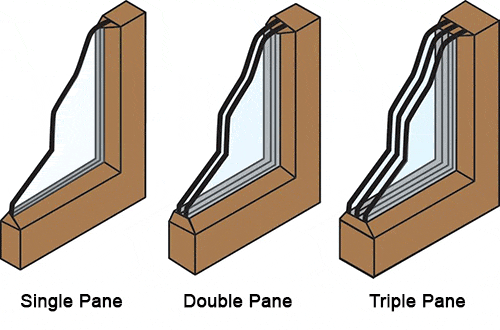
Some folks even compare single pane with double and triple pane options.
Cost of triple pane vs double pane windows:
In my experience, when the topic of triple pane glass comes up some homeowners immediately say “oh no, we don’t need that!” I find they tend to say that because they’ve received a quote for windows with triple pane glass before and the pricing was HIGH. This led them to believe that pricing for all triple pane windows will be high.
As with everything relating to prices of replacement windows there are many factors at play, but the cost difference doesn’t need to be too substantial. Perhaps $100 per window is a decent estimate. So if you can get a great vinyl replacement window installed for around $350 with double pane glass then switching to triple pane glass would put you in the $450 neighborhood. Sure, it’s more expensive, but it’s nowhere near the $800 per window that some companies try to charge.
Why do some companies try to charge $800-$1000 per window for triple pane windows?
We’ll be writing a whole series on the tricky practices of some window companies out there. The short answer is because people pay it sometimes. If nobody was buying they’d either change their ways or go out of business. Congrats to you for not taking the bait, but you can be sure there was someone behind you snapping it up.
These companies will likely tend to continue to struggle due to the fact that people are much more informed than they were years ago.
Remember, when deciding between triple pane vs double pane think about how long you’ll be in the home and whether energy savings over time are worth spending money upfront today.
If you haven’t taken a look yet, try out our window reviews pages to get a better idea of the options.
If you’re looking for a window company right now, the best advice we have is to check out our list of the best window companies all over the country. You can find it right here.
If you’ve been shopping for replacement windows, you’ve probably come across Marvin Infinity fiberglass windows. They’re marketed as one of the most durable, attractive, and energy-efficient options on the market — and they come with a price tag to match.
But are Marvin Infinity windows really worth the cost? Or are you paying more for the brand name than for performance?
In this detailed 2025 review, we’ll break down real pricing, warranty details, quality ratings, and customer feedback to help you decide if Marvin Infinity windows are the right fit for your home.
Review Snapshot
Last Updated: November 9, 2025
Manufacturer
Infinity by Marvin
Window Type
Fiberglass Frames
Price Range
$$$ (Expensive)
Warranty
Lifetime Residential / 20 Yeas Glass Seal
Reviewer
Dan Schweihs – 20+ years in window replacement
★★★★★
★★★★★
4.2 / 5 Overall
Pros
Many color options
Fiberglass frames look like wood
Widely available
Cons
Fiberglass drives up cost
Higher air infiltration ratings
Higher cost vs quality
🟩 Quick Verdict
Overall Rating: 89 / Grade: A-
Category
Score
Quality
92
Energy Efficiency
90
Options
82
Warranty
86
Price
80
Overall
89 (A-)
Bottom line: Marvin Infinity fiberglass windows are among the top-tier replacement options available in 2025. They’re strong, energy-efficient, and visually appealing — but they do cost significantly more than high-end vinyl alternatives like ProVia Endure or Soft-Lite Elements. Unfortunately you don’t necessarily get a lot for the extra money you’ll spend.
If you’re replacing windows in a forever home or want a sleek fiberglass look, they’re an excellent long-term choice. If you’re focused on cost or faster ROI, a premium vinyl window may make more sense.
Who Makes Marvin Infinity Windows?
The Infinity line is made by Marvin, one of the most respected names in the American window industry. Marvin is known for its craftsmanship and architectural-grade design, producing both wood-clad and fiberglass windows.
The Infinity series was developed specifically as a fiberglass replacement line, designed for homeowners who want high-end performance with lower maintenance than wood.
The frames are made from Ultrex®, a pultruded fiberglass material that’s incredibly rigid, stable, and resistant to temperature swings. Marvin often highlights that Ultrex expands 87% less than vinyl in extreme heat — which means less stress on seals and glass.
Unlike Marvin’s Elevate and Essential lines, Infinity windows are sold primarily through authorized dealers, not big-box stores. That means you’ll often work directly with a local Marvin partner for your quote, which can affect pricing and installation quality.
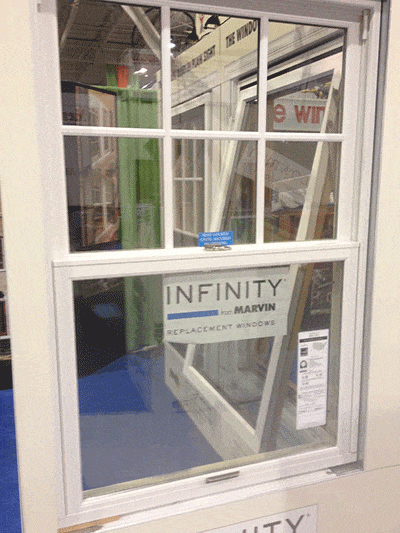
Here is a very nice looking Marvin Infinity replacement window
As you can see in the above picture the Marvin Infinity window does a great job of looking like a traditional wood window.
Design & Build Quality
If there’s one thing Marvin Infinity windows do well, it’s build quality. These are solid, premium fiberglass units, meaning they have a very nice look.
Frame Material: Ultrex fiberglass exterior, with an optional EverWood® interior finish (a wood-grain composite that can be stained to match your trim).
Durability: The fiberglass frames resist warping, cracking, or expanding in hot and cold weather — one of the biggest advantages over vinyl.
Finish: The exterior acrylic finish is fade-resistant and applied through a patented process that bonds color into the fiberglass surface.
Hardware: Infinity windows use strong, low-profile hardware with finishes that match the frame. Operation feels smoother and more substantial than typical vinyl windows.
In short, these are high-end, architecturally refined windows built for homes where aesthetics matter as much as function.
Score: 92/100
Energy Efficiency & 2025 Federal Tax Credits
With energy prices on the rise, window efficiency is more important than ever — and Infinity windows perform well here.
Most models include:
Low-E coatings to reduce solar heat gain
Argon gas fills between panes
Dual or triple-pane glass options
Warm-edge spacers to reduce condensation and energy loss
Typical NFRC Ratings
U-Factor: 0.27–0.29 (lower is better)
Solar Heat Gain Coefficient (SHGC): 0.22–0.30
Air Infiltration: < 0.05 cfm/ft²
That means Marvin Infinity meets ENERGY STAR® criteria in all U.S. regions.
2025 Energy Tax Credit
The Federal Energy Efficient Home Improvement Credit (2025) allows homeowners to claim 30% of the cost (up to $600) on qualifying energy-efficient windows.
✅ Marvin Infinity windows can qualify under current ENERGY STAR standards, meaning you can still take advantage of this federal tax credit before it expires. You’ll need to order a qualifying efficiency package and you’ll need to order it soon!
If you’re replacing multiple windows, that can add up to meaningful savings — but the key is ordering before the program ends.
Score: 90/100
Marvin Infinity Window Pricing (Installed Costs for 2025)
Installed costs vary based on the window style, region, and dealer — but here’s what you can expect in 2025.
🏠 National Average Installed Costs
Window Type
Typical Installed Cost (Per Window)
Range
Double-Hung
$1,200 – $1,800
High-end homes: $2,000+
Casement
$1,400 – $2,100
Large sizes: $2,500+
Slider
$1,100 – $1,700
Picture / Fixed
$950 – $1,400
Bay or Bow
$4,000 – $6,500
Depending on size & structure
Prices include professional installation through a Marvin-authorized dealer.
Estimates based on authorized dealer pricing and 2025 installation averages.
Score: 80/100
Warranty Coverage
Marvin provides a Limited Lifetime Warranty on Infinity windows, which includes:
Lifetime coverage on the fiberglass frame
20 years on glass seal failure
10 years on hardware and other components
While solid overall, it’s worth noting that some competitors like ProVia and Soft-Lite offer non-prorated lifetime warranties with glass breakage coverage included.
Marvin’s warranty is reliable, but not industry-leading — especially for homeowners who plan to stay in the house long-term.
Score: 86/100
Options & Customization
Infinity windows come in fewer style options than Marvin’s wood-clad lines, but you still have a good range of flexibility:
Styles: Double-hung, casement, awning, slider, bay, bow, round-top, and picture windows
Interior finishes: EverWood, white, stone white
Exterior colors: Stone white, bronze, cashmere, pebble gray, and custom colors through select dealers
Grilles: Simulated divided lites (SDLs), between-the-glass grilles, or no grilles for a clean modern look
If you’re used to vinyl lines like ProVia Endure or Soft-Lite Elements, you’ll find Infinity’s color and hardware choices more limited — but more design-forward.
Marvin Infinity windows are often ordered with simulated divided lites or SDL grids. This means the grids are on the outside of the glass which is consistent with the look of a wood window.
SDL grids on a Marvin Infinity window.
Notice the hardware in the picture below. There are MANY options and they have a very nice classic look.
Marvin Infinity window hardware provides a classic look.
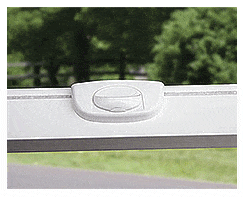
One last design element to point out is the lack of typical tilt-latches. As you can see in this picture, the Marvin Infinity window skips the typical told latches for a very clean and elegant look.
Marvin Infinity windows without the typical tilt latch on the sash.
You can see the joint between the grid and the sash frame is pretty tight and very clean looking. If you get up this close to it, you can tell that it is a separate piece, but nobody is going to go around you house inspecting things like this. If they are you probably don’t want to invite them over anyway!
Score: 82/100
Common Complaints About Marvin Infinity Windows
Like any premium brand, not all reviews are glowing. Here are the most common homeowner complaints we’ve seen in 2024–2025:
Higher cost vs vinyl alternatives Many homeowners are surprised by the installed price — often $1,200–$2,000 per window.
Limited dealer network Because Marvin Infinity windows are only sold through authorized dealers, finding a reputable installer can take time.
Long lead times Some customers report waiting 10–14 weeks for delivery, depending on customization and region.
Warranty confusion Some buyers assume “lifetime” covers glass breakage or labor — but it does not. Always read the warranty before signing.
Despite these issues, the overall satisfaction rate remains high — especially when installation is handled by an experienced dealer.
Marvin Infinity vs Other Brands (2025 Comparison)
Feature
Marvin Infinity
Andersen 400
Pella Impervia
ProVia Endure
Soft-Lite Elements
Frame Material
Fiberglass
Fibrex
Fiberglass
Vinyl
Vinyl
U-Factor
0.27–0.29
0.30
0.29
0.26
0.25
Price (Installed)
$1,200–$2,000
$1,200–$1,800
$1,000–$1,700
$900–$1,500
$850–$1,400
Warranty
Limited Lifetime
20 Years
Limited Lifetime
Lifetime
Lifetime
Air Infiltration
0.05 cfm/ft²
0.08
0.06
0.03
0.02
Grade
A-
B+
B+
A
A
The NFRC ratings for the Marvin Infinity window are pretty solid, but not particularly spectacular. This makes sense as the product was clearly designed to be pretty rather than the most efficient window on the block.
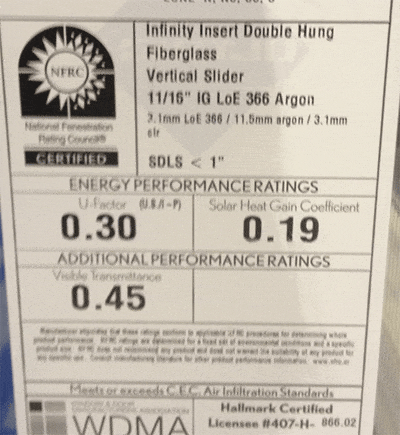
martin infinity u-factor and nfrc ratings
You can see in this NFRC sticker showing the Marvin Infinity U-Factor that the ratings for this window are solid, but not remarkable. You’re paying a premium to get this fiberglass window vs a vinyl window, but you’re not getting any real improvement in efficiency.
There are MANY options that affect the ratings so this certainly isn’t the only option, but the Marvin Infinity window will only ever be average in terms of efficiency ratings. It will never be a top performer no matter how you order it.
In addition you do get a pretty high air infiltration rating with this window. That means it does not provide a particularly great seal in windy conditions. This is more of a concern for some folks than others, but if you’re in a relatively high wind area or if you’re particularly concerned about a tight seal, the Infinity window might not be for you.
If fiberglass durability is your top priority, Marvin Infinity ranks near the top. But if energy efficiency or price matter most, vinyl lines like ProVia Endure or Soft-Lite Elements may deliver better value per dollar.
FAQs About Marvin Infinity Windows
Are Marvin Infinity windows worth the cost? Yes — if you plan to stay in your home long-term and want top-tier fiberglass performance. They’re expensive but built to last decades.
How much do Marvin Infinity windows cost in 2025? Installed costs typically range from $1,200–$2,000 per window, depending on style and region.
Do Marvin Infinity windows qualify for the 2025 energy tax credit? Yes. Most Infinity models meet ENERGY STAR® standards, qualifying for the 30% (up to $600) federal tax creditstill available in 2025.
What’s the biggest downside to Marvin Infinity windows? The price. Comparable vinyl windows often cost 30–40% less while offering similar efficiency.
How long is the Marvin Infinity warranty? A Limited Lifetime Warranty covers the frame for life, glass for 20 years, and hardware for 10 years.
Find the Best Window Companies All Over the Country
If you’re thinking about Marvin Infinity windows, make sure you’re working with a reliable, professional company.
At The Window Dog, we’ve built a nationwide network of some of the best replacement window companies, including dealers who carry Marvin, ProVia, Soft-Lite, and other top brands.
These are trusted professionals who treat customers fairly and offer transparent, pressure-free pricing.
Whether you’re replacing a few windows or the entire house, starting with a great company is the best way to make sure your project goes smoothly — and that you get the results you expect.
Our Commitment to Accuracy
We’ve been reviewing windows since 2012, and our goal has always been to provide accurate, fact-based informationfor homeowners across the country.
If you believe any detail in this review is outdated or inaccurate, please contact us with verifiable information. We’ll review it carefully and update the post as needed to ensure our content remains reliable and trustworthy.
The Okna 500 Series aka the Insul-Tec is the most popular model from Okna Windows. It is certainly a next generation product that provides some features not found on older designs. The Okna 500 is available in a range of options that allow for very solid energy efficiency ratings. This model is built with a relatively slim frame which allows for good visible transmittance numbers as well.
This is the optional auto-lock that locks when the window is closed.
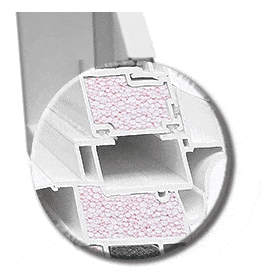
It’s important to remember that certain features that may be on a sample window are options so you should be sure they are included if you want them. Examples of these options are the auto-lock (shown above) and the foam insulated frames (shown below)
The foam filled frames are a popular option to increase efficiency.
Two standard features that are certainly part of the next generation design are the fully welded sloped sill which drains water to the outside rather than through the frame and the mortised sill dam which provides for a very tight seal. Okna windows consistently offer excellent ratings and these features contribute to that result.
See the mortised sill dam on the Okna 500 window. This feature allows for a very tight seal.
One aspect of this design that we’re not huge fans of is the exterior of the frame. The design has a lot of details and shape which is supposed to look fancy, but we just find it busy. It fits with the look of some homes, but not all and at the end of the day we’d prefer a window blend in with the home rather than standout.
Notice all of the fancy designs on the exterior of the frame. For us this is just too busy.
What should an Okna 500 cost?
I used to have a range of price estimates for Okna 500 windows with installation listed here and I discovered that I was frustrating about as many readers as I was helping. A friend of mine is an Okna dealer in Milwaukee and after learning more about his business I understood why. There can be a lot of variation in the final price due to a number of factors. Your best bet is to find a great local company and talk through the options with them.
You can be sure that a basic Okna 500 window installation should be substantially less than the $1,200 to $1,500 per window prices that we sometimes see folks post about. This is a nice mid-range window that should work well for many people.
Remember, there are MANY factors that contribute to the overall cost of your project. I would encourage you not to get a price in your head before you call a local company. The best strategy is to get a few quotes from reputable local companies and see how they compare. Some companies may try to charge more than others, so if you’re not comfortable with a quote you’ve received just get another quote.
Here’s a post I wrote on understanding window pricing. This is a fine window, but there are lots of fine windows out there. Don’t feel like you need to work with a company just to get a certain product.
If you’re unsure about the window prices that you’ve received just post a comment and we’ll do our best to help you sort through it.
What’s the bottom line?
Overall the 500 Series windows from Okna are an updated design with solid performance numbers and a legion of devoted fans. The model is the most popular product from Okna Windows and we can see why.
Other than the basic concerns about Okna Windows as a manufacturer the product performs well compared with most of it’s peers. When comparing this model to options from other manufacturers make sure you’re comparing relatively new designs. Older designs from generally well regarded companies (like Simonton for example) just don’t compare.
If you’re looking for a window company right now, the best advice we have is to check out our list of the best window companies all over the country. You can find it right here.
Here we’ll take a look at Soft-Lite Elements windows. We were recently asked to write this review by one of our loyal readers are we’re happy to help. When looking at Soft-Lite Elements windows you’ll quickly learn that they are billed as the “most energy efficient windows” produced in North America. While they are awfully energy efficient when paired with the most expensive glass options, that level of efficiency is probably overkill for most folks.
Since they make the efficiency a cornerstone of the pitch for the Soft-Lite Elements let’s start there. When the Elements window is ordered with the Solar Ultimate Glass the ratings are very low.
They advertise these windows with a U-Factor of 0.16 which is pretty darn good. The trick is that lower isn’t always better when it comes to efficiency ratings. For example, a Solar Heat Gain Coefficient of 0.21 is pretty low. That’s great if you live in a climate that is dominated by high sun, but it’s not so good if you live in a colder area. In colder regions you want to take advantage of the sun and this option would block out too much.
Perhaps more importantly the visible transmittance rating (VT rating) is pretty low with this option. A rating of 0.37 means that the window will look dark. It would be smart to look at a sample window with this glass option before purchasing to make sure you’re comfortable with how it will look.
Of course you probably wouldn’t pick this glass option unless it made sense for your home and in your climate. The important takeaway here is that the claim of “the most efficient window” isn’t really relevant unless you’re going for bragging rights. It is much more effective to pick a window and a glass option that is right for your home and your climate.
What about the look of the Solf-Lite Elements windows?
In our opinion when some windows try to be “high end” they end up working a little too hard. For example, the exterior of the frame of the window is full of curly designs that can look a little busy.
Some folks like all of these lines and the salesperson will probably tell you all about how this gives it the look of a wood window, but in our mind it’s a little much. We like windows that look like they were always part of the home rather that one that tries too hard to stand out.
This is certainly a style factor and you might like a different look than we do, but consider that a window that looks fancy when sitting on your kitchen table might look a little too busy when installed in your home.
Another style feature on the inside of the Soft-lite Elements window gives it a very clean look. The Elements window does not have the traditional tilt latches. The tilt latches are incorporated into the locks which keeps the interior of the window looking clean and uncluttered.
In the past we have seen folks who struggled with how to tilt in their windows when they have this hardware. It’s not exactly intuitive, but it works well enough.
The salesperson talked a lot about air infiltration. Is it that special?
Air infiltration ratings are a big part of the pitch for the higher end Soft-Lite windows. Their ratings are good, but they’re not unmatched. For example, the published rating for a Soft-Lite Elements window is 0.01. While there are several reasons this rating is a little deceptive (reasons described in our post on air infiltration ratings), there are other windows out there that achieve the same or very similar ratings. We know every manufacturer wants to do their best to accentuate their strengths, but in our mind Soft-Lite goes a little too far with this pitch.
How about the warranty for Soft-Lite Elements Windows?
As is the case with all quality replacement windows they come with a “lifetime warranty”. As always you need to really read the warranty to see what is actually covered. In this case there are several important limitations:
Soft-Lite does not cover labor to fix a warranty problem
Soft-Lite does not cover shipping of replacement parts
Soft-Lite offers 2 versions of their window warranty, one with glass breakage coverage and one without. Make sure you know which one you’d be getting.
These limitations aren’t necessarily deal breakers they are more limited than what you’ll find from several other manufacturers.
What’s the bottom line?
To sum things up, the Soft-Lite Elements windows are a nice option. They can be configured to have great ratings, but the marketing claims tend to push the envelope a little too far. Realistically they’re pretty darn similar to the ratings offered by many other windows. It’s important to remember that unless you’re planning on living in the home another 50 years you may not realize any savings with a 0.01 difference in any particular rating.
If you’re looking for a “high end” option, you like the local dealer and you’re comfortable with the pricing, this is a fine option. Just don’t let anyone make you think you have to spend $800 per window to get good quality. You have several other options to achieve similar ratings so be sure to shop around if your not comfortable. At $400-$500 for a typical double hung window this is a fine option. Much more than that and you’ll be better served to keep looking.
Due to the way Soft-Lite windows are typically marketed you may be able to find a better value in the Soft-Lite Imperial LS window which is very similar. There isn’t much reason to pay any more for one than the other.
How can you find a great window company?
That part is easy. Check this section for recommendations of window companies all over the country. There’s no better way to get new windows.
If you’ve been researching Soft-Lite windows in 2025, you’ve probably noticed they get a lot of attention from homeowners looking for premium vinyl replacement windows. Soft-Lite has a reputation for tight seals, excellent efficiency, and long-lasting durability — but also for prices that can make you pause.
So, are Soft-Lite windows really worth the money? How do they stack up against well-known competitors like ProVia, Simonton, or Gentek? This in-depth review will walk you through real-world performance, warranty details, pricing, and potential downsides — all based on experience and homeowner feedback, not sales pitches.
Quick Verdict
Soft-Lite produces premium vinyl windows known for excellent performance and airtight construction. Their higher-end lines like Elements and Imperial Elite are some of the best-performing vinyl windows on the market.
If you plan to stay in your home long-term and value comfort, energy efficiency, and noise reduction, they could be a smart investment if you can find them at a reasonable price. This is often easier said than done. Keep in mind there are plenty of other similar high-end options available too. If you’re looking for basic windows at the lowest price, you’ll probably want to look elsewhere.
Soft-Lite 2025 Ratings
Category
Score
Grade
Quality
91
A
Energy Efficiency
93
A
Options
84
B
Warranty
90
A-
Price
82
B
Overall
88
B+ / A-
Build Quality and Materials
Soft-Lite windows are known for tight construction and long-term performance. Their frames are thicker and more rigid than many competitors, helping reduce air leaks and keeping sashes aligned for years.
Key features that stand out:
Low air infiltration — Some of the lowest tested rates in the industry.
Fusion-welded frames and sashes — For strength and weather resistance.
Reinforced meeting rails — Improve security and performance.
Balance systems and hardware — Smooth and consistent operation.
Even Soft-Lite’s mid-range lines, like the Pro and Classic, offer stronger construction than what you’ll find from many mass-market vinyl brands.
Energy Efficiency & 2025 Federal Tax Credits
Soft-Lite is one of the few vinyl window manufacturers that can hit elite energy performance numbers when configured properly.
Their glass systems include:
Low-E coatings for solar control.
Argon or krypton gas fills for insulation.
Warm-edge spacers to reduce condensation.
Example Performance (varies by configuration)
U-Factor: as low as 0.19 (triple-pane)
SHGC: around 0.22–0.30
Air infiltration: varies by model
These numbers meet or exceed ENERGY STAR standards across climate zones.
Good news for 2025: Homeowners who install qualified energy-efficient replacement windows can still take advantage of the Federal Energy Efficient Home Improvement Credit (25C) — offering up to 30% back on qualifying costs (up to $600 per year for windows and skylights).
Soft-Lite’s premium lines typically qualify, but confirm your model’s certification with your dealer before purchase. Learn more about the credit on the ENERGY STAR website.
Soft-Lite Product Lines & Price Chart (2025)
Model
Market Tier
Typical Installed Price
Notes
Elements
Premium
$1,100–$1,600+
Flagship series. Excellent efficiency, robust design, and quiet operation.
Imperial Elite
Premium
$1,000–$1,500
High-end option similar to Elements, slightly different frame styling.
Pro
Upper Mid-Range
$850–$1,200
Strong performer with solid efficiency and good value.
Classic
Mid-Range
$750–$1,050
Great everyday option with fewer color and style choices.
Barrington
Entry-Level
$650–$900
Budget-friendly, reliable window; efficiency depends on chosen glass.
Pricing depends on installation, glass packages, and local labor rates. Always insist on itemized quotes so you can compare apples to apples.
Soft-Lite offers more customization than most vinyl brands, especially in their higher-end lines. You’ll find:
Multiple interior finishes and exterior colors
Optional woodgrain laminates
Decorative grid and etched glass options
Triple-pane and laminated glass packages for sound control
Custom hardware finishes
Their color and trim range isn’t quite as extensive as ProVia’s, but the quality of fit and finish is excellent.
Warranty Coverage
Soft-Lite’s lifetime limited warranty is competitive and covers manufacturing defects in vinyl, glass, and hardware.
Highlights:
Lifetime coverage for original owner on vinyl components and sealed glass.
Transferable (varies by dealer/region).
Hardware and screen coverage for a defined term.
Labor coverage depends on your installer — another reason to work with a reputable company. For details on how to interpret window warranties, check our Replacement Window Warranty Guide.
Soft-Lite Complaints & Common Issues
Even top-performing brands have some downsides. Here’s what you’ll commonly hear about Soft-Lite:
1. Pricing confusion: Because Soft-Lite is dealer-distributed, pricing varies. Some homeowners receive higher quotes for the same model depending on installer markup.
2. Limited dealer availability: You can’t buy Soft-Lite windows off the shelf — only through approved installers. That ensures professional installation but limits flexibility.
3. Overlapping product names: Older model names (like Imperial LS, Bainbridge, or Nirvana) still float around. Verify that your quote lists the current 2025 models.
4. Service & warranty claims: Soft-Lite itself has a strong warranty track record, but experiences can vary depending on your local dealer’s responsiveness.
None of these are deal-breakers — just things to understand before signing a contract.
Soft-Lite vs ProVia (2025 Comparison)
Feature
Soft-Lite Elements
ProVia Endure
Frame Material
Premium vinyl
Premium vinyl
U-Factor (many available options)
0.19
0.20
Air Infiltration
≤ 0.05
≤ 0.06
Exterior Finish Options
Limited
Very broad
Noise Reduction
Excellent
Excellent
Warranty
Lifetime limited
Lifetime limited
Price Range (Installed)
$1,100–$1,600+
$1,100–$1,700+
Availability
Limited dealers
Broad national dealer base
Overall Verdict
Slightly better efficiency
Slightly more finish choices
Takeaway: Soft-Lite wins on airtightness and thermal efficiency. ProVia edges ahead on finish options and national availability. Both are excellent choices for long-term homeowners.
Are Soft-Lite windows good? Yes. Soft-Lite’s premium lines are among the best vinyl windows made, offering elite performance and very low air infiltration.
How much do Soft-Lite windows cost in 2025? Expect to pay between $650 and $1,600 per window installed, depending on the model and options.
Do Soft-Lite windows qualify for energy tax credits? Most premium models do. Check ENERGY STAR labels and consult your dealer before purchasing.
Are Soft-Lite windows noisy? No — in fact, laminated and triple-pane options are great for sound reduction.
What’s the difference between Elements and Imperial Elite? They’re very similar; the difference is mainly styling and specific upgrade paths.
Where can I buy Soft-Lite windows? Through authorized Soft-Lite dealers and installers — not in retail stores.
What’s the biggest downside? Limited availability and dealer-dependent pricing. But the quality itself is excellent.
Why You Can Trust This Review
At The Window Dog, we’ve been testing and reviewing replacement windows since 2012. We don’t take payments from manufacturers or dealers — ever. Our goal is to give homeowners honest, fact-based advice without the sales pressure.
If you believe any part of this review is inaccurate, please send specific details (with documentation, if possible) to our team via our contact page. We review all corrections and update posts promptly.
Final Thoughts
Soft-Lite’s premium lines — especially Elements and Imperial Elite — remain some of the best-performing vinyl windows in 2025. They’re airtight, quiet, energy-efficient, and backed by a strong warranty.
If you plan to stay in your home for years, Soft-Lite delivers comfort and long-term savings that justify the investment. For tighter budgets, the Pro, Classic, or Barrington lines still outperform many mid-tier competitors.
When you’re ready to get quotes, compare at least two authorized dealers — and always insist on itemized pricing.
Provia Endure is a window line that you may not be familiar with. While traditionally known as a door manufacturer Provia expanded into windows several years ago. The Endure line is their top of the line window model. Is it worth the cost and nicer than the competition? Is it worth the additional cost compared to the cheaper Provia Aspect window? We’ll see.
If you’ve recieved a quote for Provia Endure windows you probably heard all sorts of claims from the salesperson. The in-home window salespeople can be a tricky bunch. It’s certainly possible that the salesperson overhyped the products to try to get the sale.
In their marketing materials Provia talks about many features that are also available from many other window manufacturers. Things like 3-1/4″ jamb depth, upgraded balance mechanisms, reinforced sashes, dual vent locks, etc are all pretty common. A salesman might act like these are unique features but they’re not.
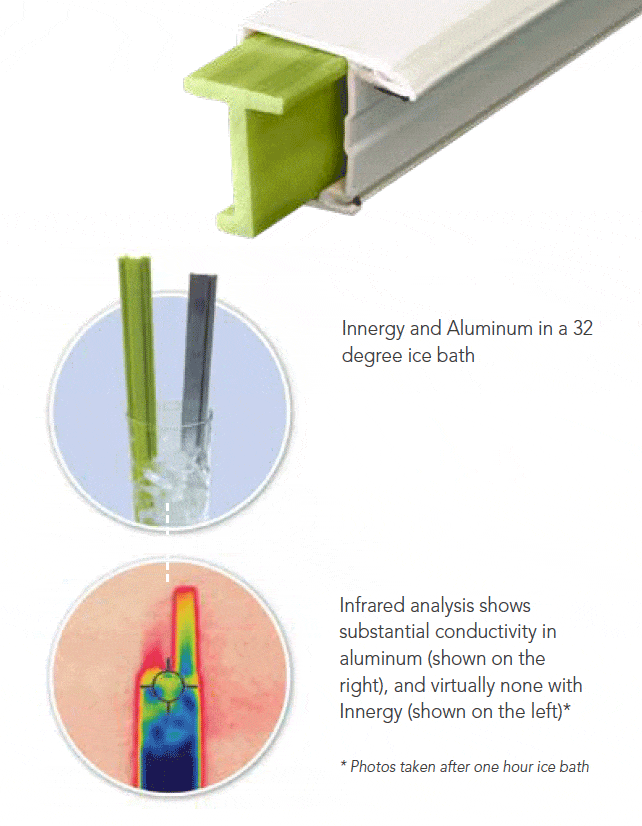
As an example, if you’ve seen their brochure for the Endure model you’ve probably seen this picture. It’s showing their sash reinforcement that they call Innergy compared to an aluminum reinforcement. The picture is meant to show you that the non-metallic reinforcement is much more efficient. What they forget to mention is that almost no nicer vinyl windows are using metallic reinforcement anymore except in specific situations.
As you can see in the picture the non-metallic reinforcement is better than aluminum but nobody really uses aluminum anyway so not too relevant.
In a similar strategy the brochure talks about Neopor foam insulation and barrier-fin weather stripping, both also very common options.
In short it’s a decent option but doesn’t really offer anything that you can’t get from many other manufacturers.
Do they offer blinds in the windows?
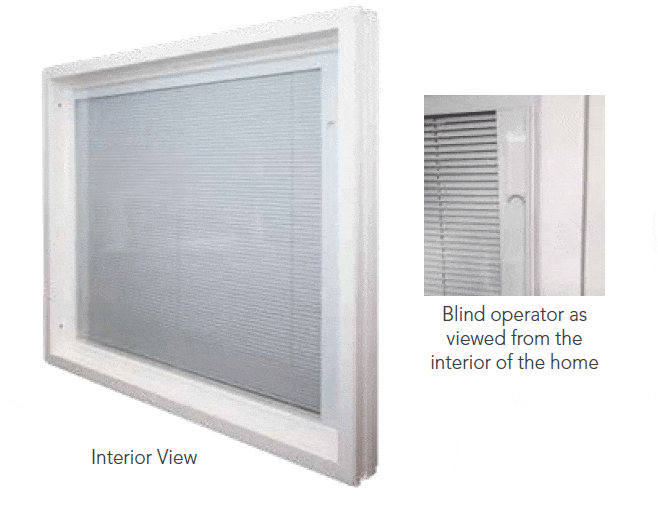
Provia does offer blinds in the Endure line, but that’s an option you might not want to rush into.
While a lot of prospective customers ask about blinds in the windows it’s important to remember Provia only offers a 10 year warranty on them. 10 years can sound like a long time but it’ll go by in a flash. Blinds in windows can be a pretty expensive option too and if you need to replace them in 11 years get ready for a big bill.
If they expected the blinds to last longer they’d offer a longer warranty. By offering a short warranty they’re telling you that they don’t expect the blinds to hold up very long. I’d avoid that option.
What about the color options?
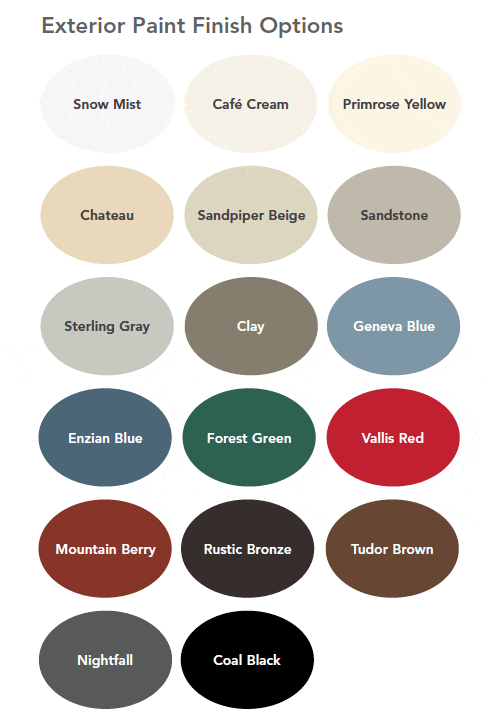
You can see the available colors for this window model below. Exterior colors have become increasingly popular and Provia offers a range of color options similar to most manufacturers.
One nice feature is that the Provia window colors can match the door color options. That can let you get an exact match in your windows and doors which is unique.
Keep in mind adding exterior colors can add $200 or more to the cost of your Provia windows. You might consider white windows with a different color exterior trim as an option to keep costs down.
What should Provia Endure windows cost?
As you might expect lots of people ask us about replacement window costs and there isn’t always a simple answer. Everything is custom made and remodeling projects can be unique so prices can vary.
I’d say a reasonable cost for a white window with basic options would be in the range of $400 -$500 before installation. Some companies won’t want to break out their installation costs separately which can make things harder to compare. I’d say maybe $600-$700 per window installed is a typical cost.
Is there a Provia Endure patio door?
They do also make a Provia Endure patio door line and we’ll be completing a review on that product soon.
What about the Provia Endure warranty?
The warranty for the Provia Endure is the same as the Provia Aspect and it’s pretty decent. Like most manufacturers they offer lifetime warranties on their windows. There are however a lot of limitations.
For example, if the purchaser doesn’t live in the house, say it’s a rental, the warranty is only 5 years. In that case the warranty on the blinds goes from a short 10 years to a very short 5 years and there is no glass breakage warranty.
We’ll have a more thorough post on the Provia window warranties online soon. For now I’d say it’s a decent warranty but certainly not unique or any better than the warranty you’d see from any other nicer manufacturer.
So, what’s the bottom line?
Ultimately there aren’t really any patents in the vinyl window business. Most manufacturers offer a range of models to cover a range of price points. The Provia Endure window is perfectly nice but not really remarkable in any way. You can get basically all of the same features and options from many companies so there’s no need to fall in love with this one.
If you’re shopping for windows I do always suggest finding a great installation company before you fall in love with any particular window model. There are plenty of great window options out there but not as many local companies that are great to work with.
To find our recommended window companies all over the country check this section. If we know someone in your neck of the woods they’ll be listed there and they’ll be happy to help.
If we don’t know anyone local to you be sure to let us know who you find. I’m sure you’re not the only person looking.
Remember, for more great window company info you can find our suggestions for the best local companies in your area right here. There’s no need to work with a company that gives you the run-around or makes the process difficult. There are plenty of fish in the sea as they say. The best way to get started is to check out our list of great window companies.